The Power of Communication in Business Education






By Romana Tabbassum, Lecturer in Business, LSST Elephant & Castle
Why Communication Matters in Higher Education
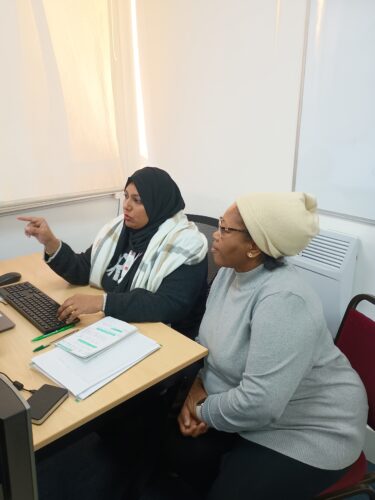
Effective communication between lecturers and students is a foundational element of academic success in higher education. Within Business programmes at LSST Elephant & Castle, communication is embedded intentionally into pedagogical design to enhance engagement, confidence and academic performance across Foundation, Level 5 and Level 6 study.
Educational research consistently affirms that learning is not solely cognitive but relational. Vygotsky’s social constructivist theory emphasises that knowledge develops through interaction, dialogue and guided participation. Similarly, Hattie’s research on visible learning identifies teacher clarity and feedback among the most influential factors affecting student achievement. These principles inform teaching practice across Business modules at LSST.
In a diverse academic community, where students enter from varied educational and cultural backgrounds, structured and purposeful communication supports belonging, progression and attainment.
.
Establishing Foundations: Communication at Entry Level
Students entering Foundation programmes often demonstrate enthusiasm alongside uncertainty about academic expectations. Establishing clarity from the outset, particularly around assessment criteria, participation standards and professional conduct, supports transition into higher education.
Within modules such as International Business Studies, presentation-based assessments provide structured opportunities for students to develop academic voice and confidence. Clear marking rubrics, scaffolded guidance and formative feedback ensure that communication skills are developed systematically rather than informally.
This approach aligns with Nicol and Macfarlane-Dick’s principles of formative assessment, which emphasise that timely, specific feedback promotes self-regulation and academic growth.
The outcome is not simply improved presentation performance, but increased classroom participation and stronger peer learning dynamics.
Communication as Structured Pedagogy in Level 5 and Level 6
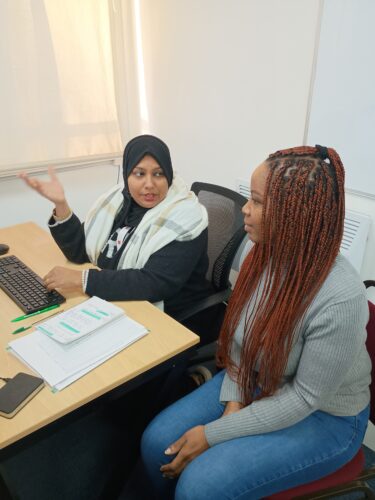
As students progress to Level 5 and Level 6 modules, academic expectations become more complex and independent. Consistency in communication becomes increasingly important in supporting academic maturity.
Key strategies embedded across Business teaching include:
- Active listening: enabling students to articulate academic concerns and questions.
- Culturally responsive dialogue: recognising diverse perspectives in case discussions and group work.
- Personalised formative feedback: linking comments directly to assessment criteria and progression.
- Collaborative academic discussion: encouraging debate grounded in theory and real-world application.
- Clear and consistent routines: reinforcing professional standards in attendance, deadlines and conduct.
Real-life business case studies are frequently used to connect theory with contemporary industry practice. This reflects Kolb’s experiential learning model, where students construct understanding through reflection on applied scenarios.
Level 5 BA (Hons) Business Management students at LSST (E&C) reflected:
Esther Conteh, BA (Hons) Business Management (Year 2), LSST (E&C)
“During lectures at LSST, we discuss modules in relation to real-life scenarios. We are motivated to debate and give our opinions, which inspires participation, even for those who usually shy away from speaking publicly.”
Belitha Ntontelo, BA (Hons) Business Management (Year 2), LSST (E&C)
“The teaching approach encourages active engagement and critical thinking. Real-life business examples and interactive discussions make complex topics easier to understand. The supportive classroom environment has helped me stay motivated and focused on achieving strong academic outcomes.”
Oritsegbubemi Gbenebitse, BA (Hons) Business Management (Year 2), LSST (E&C)
“The structured guidance and clear expectations within the module have significantly strengthened my academic confidence. The emphasis on feedback and discussion has helped me improve both my analytical skills and overall approach to studying. I have become more disciplined and focused in managing my assignments.”
Maria Nutu, BA (Hons) Business Management (Year 2), LSST (E&C)
“Lectures are delivered in a way that makes complex concepts accessible and engaging. Interactive discussions and constructive feedback create a positive academic environment where students feel encouraged to participate and think critically.”
Eugenia Calin, BA (Hons) Business Management (Year 2), LSST (E&C)
“Professionalism, clarity and consistent support throughout the module have strengthened my understanding of key business concepts. The structured communication and academic guidance have contributed positively to my overall learning experience.”
Paul Lee, BA (Hons) Business Management (Year 2), LSST (E&C)
“Returning to education as a mature student was challenging, but clear explanations and supportive feedback made the transition smoother. The teaching style has helped me develop confidence in tackling complex assignments and maintaining high academic standards.”
This illustrates how structured academic discussion strengthens both subject comprehension and confidence.
Such reflections demonstrate how intentional communication practices particularly benefit widening participation cohorts, including mature learners.
Communication, Professional Identity and Employability
In Business education, communication is not only a teaching strategy but a professional competency. The classroom functions as a rehearsal space for workplace communication: structured debate, accountability, collaborative problem-solving and constructive feedback mirror professional expectations in organisational contexts.
Bandura’s theory of self-efficacy suggests that confidence develops through mastery experiences and positive reinforcement. When students are supported through clear guidance and constructive dialogue, they build academic resilience and professional identity.
Importantly, the focus remains academic and collective rather than personal. Communication at LSST is framed around:
- High expectations
- Transparent standards
- Respectful dialogue
- Shared academic responsibility
This institutional approach ensures equity: quieter students, international students and those transitioning from Foundation level receive consistent clarity and encouragement.
Conclusion: Communication as an Institutional Commitment
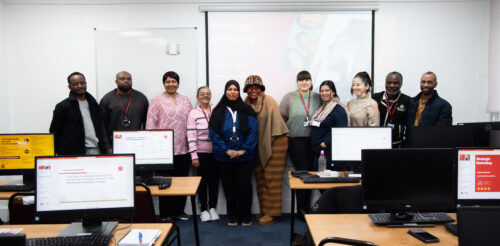
At LSST Elephant & Castle, effective communication underpins Business education across all levels of study. Through structured dialogue, consistent expectations and evidence-informed pedagogy, lecturers create learning environments where students develop subject expertise alongside confidence and resilience.
Research and practice align in demonstrating that teacher clarity, meaningful feedback and respectful academic dialogue significantly enhance student achievement. Embedding intentional communication strategies within Business programmes ensures that students are not only academically prepared but professionally equipped for future careers.
Communication, therefore, is not an adjunct to teaching; it is central to student success.
References:
Hattie, J. (2009). Visible Learning: A Synthesis of Over 800 Meta-Analyses Relating to Achievement. London: Routledge.
Nodding’s, N. (2005). The Challenge to Care in Schools: An Alternative Approach to Education. 2nd end. New York: Teachers College Press.
Roorda, D.L., Koomen, H.M.Y., Spilt, J.L. and Oort, F.J. (2011). ‘The influence of affective teacher–student relationships on students’ school engagement and achievement: A meta-analytic approach’, Review of Educational Research, 81(4), pp. 493–529.