Turning Life Experience into a Degree: How Mature Learners Add Value in the Classroom





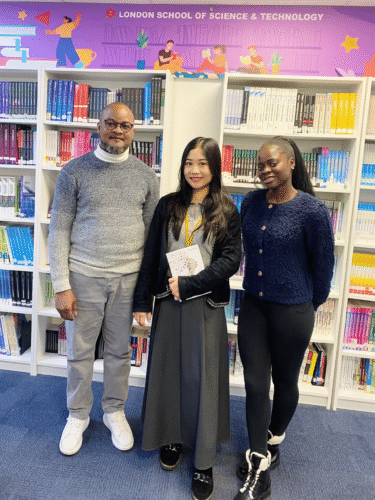
By Dr Leanne Thi Thao Oanh Bach, Lecturer in Business and Module Leader, LSST Elephant & Castle
Mature Learners: A Broad Definition, Many Pathways
For many young adults, starting higher education is an important milestone, often marking a shift from living dependently at home toward greater independence. For mature students, however, beginning an undergraduate degree can carry a different meaning. Rather than representing a first step into adulthood, it is often a deliberate and transformative decision shaped by prior life, work, and family experiences.
In line with the national strategy for access and student success, the Office for Students (2020) defines mature students as those aged 21 or over when starting their course. This broad category includes learners of diverse ages, backgrounds, and needs. Mature students have long been central to widening participation in UK higher education. The 1987 HE: Meeting the Challenge strategy encouraged universities to admit more non-traditional learners, particularly those entering later in life. Ensuring fair access and participation for this group is therefore crucial for social mobility, as higher education offers a second chance to those who missed out earlier or for whom university was not the right option immediately after leaving school (Office for Students, 2020).
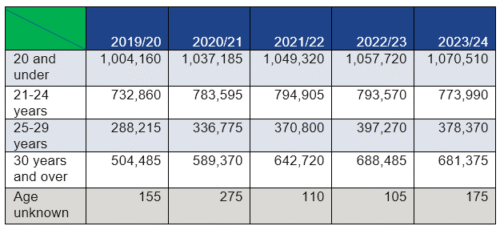
In the academic year 2023/24, UK higher education student enrolment stood at approximately 2.90 million, with new entrant numbers slightly declining compared with the previous year (HESA, 2025). Recent participation metrics indicate that mature student participation in higher education has risen from around 25.5 % in 2018/19 to around 29.9 % in 2024/25 (Advance-he.ac.uk, 2025)
Figure 1. HE student enrolments by age groups
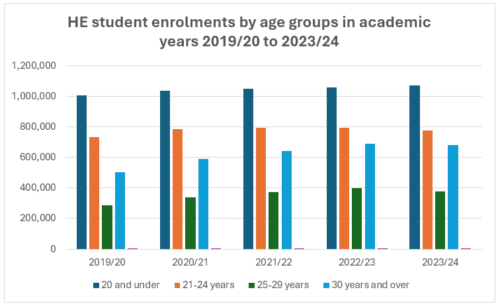
Table 1. HE student enrolments by age groups
Mature learners don’t walk into a lecture hall as blank slates; instead, they arrive with a wealth of “hidden” credits earned through years of professional and personal experience (Hubble and Bolton, 2021).
Many universities formally recognise learning gained from work or life experience through Accreditation or Recognition of Prior Learning (APL/RPL) , which allows students to claim academic credit or advanced standing for prior certificated or experiential learning where it meets equivalent learning outcomes and quality standards. This approach is supported by the UK Quality Code for Higher Education (2024), thelatest sector-agreed framework that underpins institution-level policies on admissions, academic standards and the recognition of prior learning in UK higher education. This means your past is not just a background; it is a head start that proves the classroom is not the only place where high-level learning happens.
Mature learners play a crucial role in Higher Education, as they often approach their studies with strong motivation, valuable life experience, and a clear determination to succeed, all of which contribute to a richer and more diverse student community (Office for Students, 2020). Beyond just their resumes, mature students bring a positive energy to the student body, as they often make significant sacrifices to be there. They arrive with a fierce commitment to excel and a level of motivation that enriches the entire academic environment.
We often refer to these students as “returners” – individuals who have stepped away from formal education only to return with a sharper perspective. In the classroom, this professional history acts as a bridge between abstract theory and reality (Pearce, 2017). While a younger student might look at a management theory as a concept on a page, a mature learner can ground that theory in a real-world case study from their own career, turning a quiet seminar into a dynamic exchange of practical insights (Hubble and Bolton, 2021).
Why Mature Learners Often Thrive in Discussion-Based Learning
Not all learning is about memorising facts or passing exams. In seminars, workshops, and case studies, what really matters is insight, how ideas are explored, questioned, and applied. Discussion-Based Learning is an approach to teaching where learning takes place primarily through conversation, dialogue, and shared reflection, rather than through lectures and memorisation alone (Biggs and Tang, 2011). It allows students to draw on work, life, and professional experiences to enrich discussions, making learning more relevant and engaging. This discussion-based approach helps create an inclusive environment in higher education, especially allowing mature learners to feel confident sharing their professional and life experiences as they engage with new ideas (Brookfield, 2013).
Mature students frequently ask more reflective questions, connect theory to real-world situations, and help others see the bigger picture. Adult learning research suggests that learners with practical experience are particularly effective at making meaning through dialogue, reflection, and problem-solving rather than surface learning (Kolb, 1984; QAA, 2014). These contributions can deepen understanding not only for mature learners themselves, but for their peers as well.
Mature Learners’ Voices in Discussion-Led Classrooms
During interviews with my mature students at LSST, I asked: “Have you ever shared a real-life example in class that helped others understand the topic?”. Domingos Dibanzilua, a final-year BA (Hons) Business Management student and experienced chef manager, reflected on how his professional background informed his learning during the Developing Leadership and Management Skills module. He explained:
“When I manage my team, communication is key. You need to know how to communicate with different people. Some people work better when you talk to them one to one, while others prefer group discussions. You also need to understand the strengths and weaknesses of each person.”
He went on to say that sharing these experiences in class made him feel proud, not only because he had achieved his own goals, but because “helping others to reach their goals and potential is just as important.”
I have noticed the visible impact of Domingos’ real-world examples on class engagement. Younger students engage more deeply, ask follow-up questions, and make connections to real-world scenarios. It is a clear example of how mature learners enrich classroom discussions [LTTO5] and help their peers see how theory comes alive in practice.
When classrooms bring together multiple perspectives, learning becomes richer and more engaging. Applied and discussion-led environments value collaboration, critical thinking, and lived experience, which can create space where mature learners are not simply keeping up, but actively shaping the learning experience.
Recognising the Challenges Alongside the Strengths
While mature learners bring significant strengths to higher education, it is just as important to acknowledge the challenges they often face when returning to study. Many juggle academic work alongside employment, family responsibilities, and caring roles, which can place considerable demands on their time and energy. Unlike traditional school-leaver students, mature learners frequently have less flexibility in how and when they can study, making time management both essential and challenging.
Alina Bors, Student Ambassador and BA (Hons) Business Management with Foundation student at LSST Luton, shared her personal journey: “As a full-time mother and wife, I once believed there was no time left for me to do anything else. My days revolved around caring for my family, a role I loved deeply, but over time, I lost touch with my own ambitions. I felt anxious, stuck, and unsure of who I was beyond being a mother. The thought of returning to education terrified me. I worried about balancing responsibilities and whether I was still capable of studying after so many years away from school.”
As a lecturer at LSST, where the majority of our students are mature learners, I see this reality every day. In conversations before or after class, students often share how they move between work shifts, family commitments, and assignment deadlines, sometimes all within the same day.
For some students, rebuilding confidence with digital learning platforms and academic conventions can also take time, especially after long periods away from formal education. Navigating virtual learning environments, online submissions, and digital research tools can initially feel unfamiliar or overwhelming.
Recognising these challenges isn’t about lowering expectations, it’s about creating learning environments that are inclusive and supportive. At LSST, our commitment to inclusive teaching, highlighted in reflections from both faculty and students, shows how thoughtful support can make a real difference. Guided introductions to digital tools, flexible assessment options, and opportunities for group discussion all help mature learners turn their professional and life experience into academic confidence.
In my experience, once mature learners regain familiarity with academic systems and develop effective study strategies, their resilience, motivation, and life experience become powerful drivers of success, enhancing not only their own learning, but the classroom experience as a whole. With the right support and inclusive teaching practices, what initially seems like a barrier often becomes a stepping stone to meaningful achievement.
From Workplace Experience to Academic Credit: What I See in the Classroom as a lecturer
As a lecturer, one of the most rewarding things I have been observed is how mature students gradually learn to translate their workplace experience into strong academic work. Many arrive unsure whether their professional background will “count” at university. Over time, through reflection, they begin to see that their experience is not separate from academic learning, it is central to it.
Jacqueline Harris, one of the BA (Hons) Business Management students interviewed, reflected on this development, saying:
“I have improved a lot since day one. Doing the actual work and bringing my experience into academic writing has become much easier. I’ve definitely come a long way.”
Domingos Dibanzilua also shared how his confidence has grown through the course, particularly in communication:
“Before I started this course, my communication skills weren’t very strong. Studying here helped me develop skills that were once a weakness. I feel great now because I can communicate much more effectively with my team.”
Figure 2. Turning experience into Insights and Growth
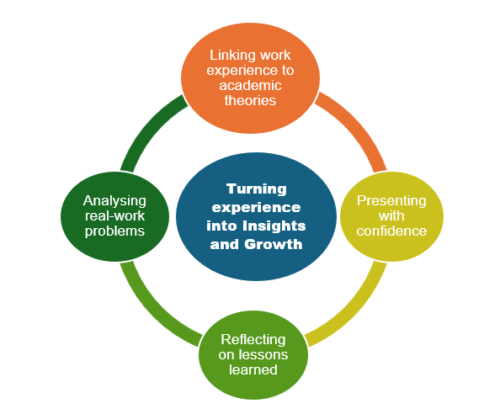
From my experience, mature students gain a significant advantage when they draw on their work and life experience in reflection-based assignments. I have seen mature students reflect on their experience of managing teams and link it directly to leadership and management theories. For example, students reflect on how they have motivated staff, handled conflict, or made decisions under pressure, and then connect these experiences to models of leadership they encounter in their studies. What begins as a practical story becomes a thoughtful academic analysis.
Others use skills they have developed at work in equally powerful ways. Students who have spent years presenting ideas, leading meetings, or communicating with clients often excel in presentation-based assessments. Their confidence, clarity, and ability to engage an audience are skills honed long before entering higher education and these strengths become visible in assessed presentations.
What makes the difference is not the experience alone, but the reflection that sits behind it. Through reflective writing, students move from describing what happened to analysing why it mattered and what they learned. This shift is something we actively teach and support. It is not something students are expected to already know how to do.
Based on my observations as a lecturer, once mature learners realise that reflection turns lived experience into academic insight, their confidence grows quickly. They begin to recognise that their professional journeys are not a barrier to success in higher education, but they are a foundation for it.
These classroom observations are reflected in wider student experiences at LSST Elephant & Castle. One such example is the journey of Marcia Cunningham, a BA (Hons) Business and Management student, who overcame personal and structural barriers to become the published author of four novels while studying for her degree.
Speaking at an event in Elephant & Castle’s auditorium, Marcia reflected on her initial relationship with higher education, explaining:
“Before LSST, I felt intimidated by higher education. I didn’t think people like me could thrive in that space academically or as an author.”
Now in her sixties, and after years of believing her manuscripts would remain unseen, Marcia has achieved a remarkable milestone, publishing four novels and continuing to develop new work. She attributed this transformation to the supportive learning environment at LSST, adding:
“But my LSST lecturers made learning supportive and very empowering. They removed the fear I had – and replaced it with confidence – and that confidence propelled me to publish my book series.”
Similarly, another BA (Hons) Business Management student at Elephant and Castle campus, Marcus Odonkor secured his graduate role directly through the LSST Careers Fair, demonstrating how maturity, preparation, and reflective engagement with employability support can translate learning into professional success. He expressed:
“I would like to thank The Most High and everyone at LSST Elephant and Castle for making this opportunity possible for me. It has propelled my confidence and purpose in life.”
Although mature learners follow diverse pathways, their experience, when recognised and supported, becomes a powerful driver of growth rather than a barrier, enabling them to connect real-world knowledge with academic theory, develop confidence, engage meaningfully in classroom dialogue, and achieve tangible personal, academic, and professional successes. This combination of reflection, practical insight, and purposeful engagement demonstrates that returning to study later in life is not a step backwards, but a deliberate and empowering choice.
It’s Never Too Late to Learn – It’s the Right Time
As part of my conversations with mature students, I asked one final question: “What would you say to someone who thinks they’re ‘too old’ or that it’s ‘too late’ to study?”
Without exception, their responses carried the same message – It is never too late. Students spoke about choosing education for themselves, on their own terms, and at the right time in their lives. For many, returning to study was not about following a traditional timeline, but about recognising readiness, purpose, and confidence. As one student powerfully expressed, “Never underestimate yourself. You can learn at any age, even at 60, if you are working towards something meaningful for yourself.”
Returning to education later in life can feel daunting. Many mature learners arrive with questions about whether they belong, whether they are “too late,” or whether their experience will truly count in an academic setting. What stood out was the shift in perspective. Rather than seeing age as a disadvantage, students described it as a source of clarity. They knew why they were studying, what they wanted to achieve, and how to use their experience to support their learning. Studying later in life was not a step backwards, but a deliberate and empowering choice.
From my experience as a lecturer, this mindset really marks a turning point. Education does not have an expiry date, and neither does potential. For mature learners, the classroom becomes a space where past experiences are not left behind, but transformed into insight, growth, and academic success. If you have lived it, reflected on it, and learned from it, you are not behind, you are ready.
References
Advance-he.ac.uk. (2025). Governance News Alert: Office for Students (OfS) Access and participation data dashboard and How student outcomes have changed since 2010 report | Advance HE . [online] Available at: https://www.advance-he.ac.uk/knowledge-hub/governance-news-alert-office-students-ofs-access-and-participation-data-dashboard-and?utm_source=chatgpt.com [Accessed 29 Jan. 2026].
Biggs, J. and Tang, C. (2011) Teaching for quality learning at university: What the student does (4th edn.). Maidenhead: McGraw-Hill Education.
Brookfield, S.D. (2013) The skillful teacher: On technique, trust, and responsiveness in the classroom (3rd edn.). San Francisco: Jossey-Bass.
Higher Education Statistics Agency (HESA), 2025. Higher Education Student Statistics 2023/24 . [online] Available at: https://www.hesa.ac.uk/news/20-03-2025/sb271-higher-education-student-statistics/numbers [Accessed 29 January 2026].
Hubble, S. and Bolton, P. (2021). Mature higher education students in England . [online] https://commonslibrary.parliament.uk . House of Commons Library. Available at: https://researchbriefings.files.parliament.uk/documents/CBP-8809/CBP-8809.pdf [Accessed 29 Jan. 2026].
Lewis, J., West, A., Roberts, J. and Noden, P. (2016) The experience of coresidence: young adults returning to the parental home after graduation in England . Families, Relationships and Societies, 5(2), pp. 247–265.
Office for Students (2020) Mature and part-time students.Office for Students. Available at: https://www.officeforstudents.org.uk/media/3da8f27a-333f-49e7-acb3-841feda54135/topic-briefing_mature-students.pdf (Accessed: 29 January 2026).
Pearce, N. (2017). Exploring the learning experiences of older mature undergraduate students. Widening Participation and Lifelong Learning , 19(1), pp.59–76. doi:https://doi.org/10.5456/wpll.19.1.59.
Quality Assurance Agency for Higher Education (QAA) (2014) Accreditation of prior learning . Gloucester: QAA. Available at: https://www.qaa.ac.uk/docs/qaa/quality-code/accreditation-of-prior-learning.pdf (Accessed: 29 January 2026).