LSST Luton Academic Publishes Influential Study on Digital Reading






By Kunal Chan Mehta | Article Date: 28 November 2025
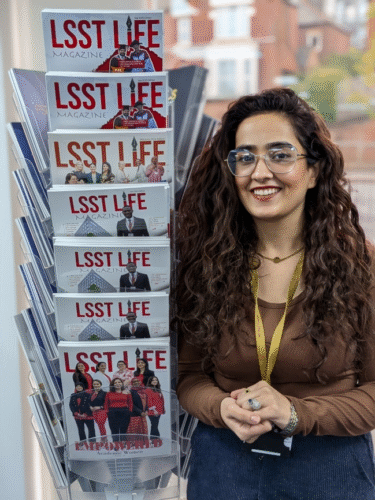
LSST is advancing its digital literacy focus following a strong research contribution by Noor Mukhtar – a Lecturer in Business at LSST Luton. Her recent study, published in the South Eastern European Journal of Public Health, centred on graduate readers in a fully digital learning environment and offers compelling evidence of how extensive reading cultivates vocabulary growth and learner self-efficacy.
Based at Onaizah College in Saudi Arabia, the multi-author research examined how students naturally engaged with online academic materials already embedded within their digital ecosystem, such as e-books, PDFs, lecture notes and scholarly articles.
“We were not creating an artificial intervention,” said Mukhtar. “We wanted to observe authentic academic behaviour – how students genuinely interacted with the reading resources available to them, particularly as their learning had become overwhelmingly digital.”
A structured questionnaire captured the frequency, variety and enjoyment of reading, revealing how postgraduate engagement in an era where academic success increasingly hinges on digital reading competence. “Our ambition was to understand natural reading behaviour within their academic setting, especially as digital materials became the dominant mode of access,” added Muktar.
The results were unequivocal: students who read more extensively demonstrated stronger vocabulary development, higher reading confidence and more positive attitudes toward English-language texts. Senior students, especially those in their third year, exhibited significantly higher vocabulary growth and broader reading engagement.
“Academic maturity and continued exposure to research-driven tasks naturally strengthen reading behaviour,” outlined Mukhtar. “Over time, reading becomes easier, more habitual and, crucially, more meaningful.”
Motivational shifts also emerged despite the study’s quantitative design. “Students reported greater confidence, reduced anxiety and increased enjoyment when reading in English,” said Mukhtar. “Some even indicated they would continue reading independently beyond their coursework — which is a profound marker of academic autonomy.”
Mukhtar emphasised that such confidence is cultivated rather than innate. “When students engage regularly with texts that feel accessible and relevant, reading becomes more than academic labour; it becomes an empowering intellectual habit.”
Mukhtar’s work urges higher education providers to formalise a structured, digital-native, extensive reading ecosystem across postgraduate learning.
Strategically Valued
She also emphasised the strategic value of LSST’s student‑support infrastructure. “The SAPR Stream provides a robust foundation for tracking student engagement across all aspects of their academic journey — from attendance and assignment submissions to participation and support needs,” she explained. “When combined with tools such as Xreading — an online reading and learning platform — it enables tutors to spot students who may benefit from extra guidance or encouragement. In this way, we ensure that no one is left behind and every learner has the opportunity to thrive.”
Mukhtar also advocates and is working on cultivating cross-campus reading communities. “Digital discussion boards or inter-campus reading committees would offer vibrant academic spaces where LSST students across London, Luton and Birmingham could exchange ideas. It would build on LSST’s blogging culture – but with deeper interaction and scholarly exchange.”
“This research exemplifies LSST’s dedication to academic innovation and evidence-led pedagogy,” said Mr Ali Jafar Zaidi, CEO at LSST. “By strengthening digital-native reading practices, we empower students to develop the linguistic dexterity and scholarly confidence that is demanded by today’s global knowledge economy.”
Aqeel Syed, LSST Luton Dean, emphasised the transformative potential of Mukhtar’s findings. “We are deeply proud of Noor’s contribution and her research speaks directly to the challenges and aspirations of our students.”
Syed Rizvi, Academic Dean of LSST Elephant and Castle and LSST Stratford and Dean of Learning and Teaching, added: “The prospect of coordinated digital reading initiatives, collaborative reading communities and enhanced academic-library integration is not only timely – it is essential for cultivating autonomous and research-ready graduates”
Noor Mukhtar’s work stands as a significant contribution to LSST’s academic strategy, advancing the LSST’s mission to further cultivate confident, digitally fluent and intellectually agile postgraduate scholars. Her research not only enriches LSST’s pedagogical insight but also provides a powerful framework for the next generation of reading-centred academic innovation.
Harvard Reference
Mukhtar, Sahar Mukhtar, Dr. Hajir Abd Elbagi Mohamed Abdelrahman, Aisha Mohamed Osman Makki Abdelrahim, Noor Mukhtar, M. (2025). The Impact Of Extensive Reading On Vocabulary Development And Reading Fluency Among Graduate Students At Onaizah College, Saudi Arabia. South Eastern European Journal of Public Health, 31–41. https://doi.org/10.70135/seejph.vi.6798
Read more on Noor’s research here: https://doi.org/10.70135/seejph.vi.6798
For additional information or interviews, please direct questions to LSST’s Public Relations Manager via kunal.mehta@lsst.ac.
We hope you enjoyed reading LSST News. Join our vibrant academic community and explore endless opportunities for growth and learning at www.lsst.ac/courses or via admissions@lsst.ac. Discover your path at LSST and embark on a transformative educational journey today. Think Higher. Think LSST.