British Higher Education is Not Dying – It is Evolving

Article Date | 19 August, 2026
By Kunal Chan Mehta, PR Manager and Editor of LSST Life | Article Date: 19th August 2026
Read the headlines, and you could be forgiven for believing British higher education is finished. Campus reserves are draining, AI is destabilising familiar teaching and a hostile political class is questioning the value of degrees. The panic is understandable and the crisis real, yet the popular diagnosis gets it wrong. While the next few years will be painful, they may prove to be the catalyst that forces an overdue structural evolution.
The mass-market model of British higher education that took shape through the reforms of the early 1990s is now running out of road (UK Parliament, 1991). The standard three-year degree remains one of the most powerful forms of education. But it can no longer be expected do everything, for everyone, in the same way. Careers are changing. Technology is changing. The population is changing. Employers' expectations are changing. So, in turn, higher education must change too.
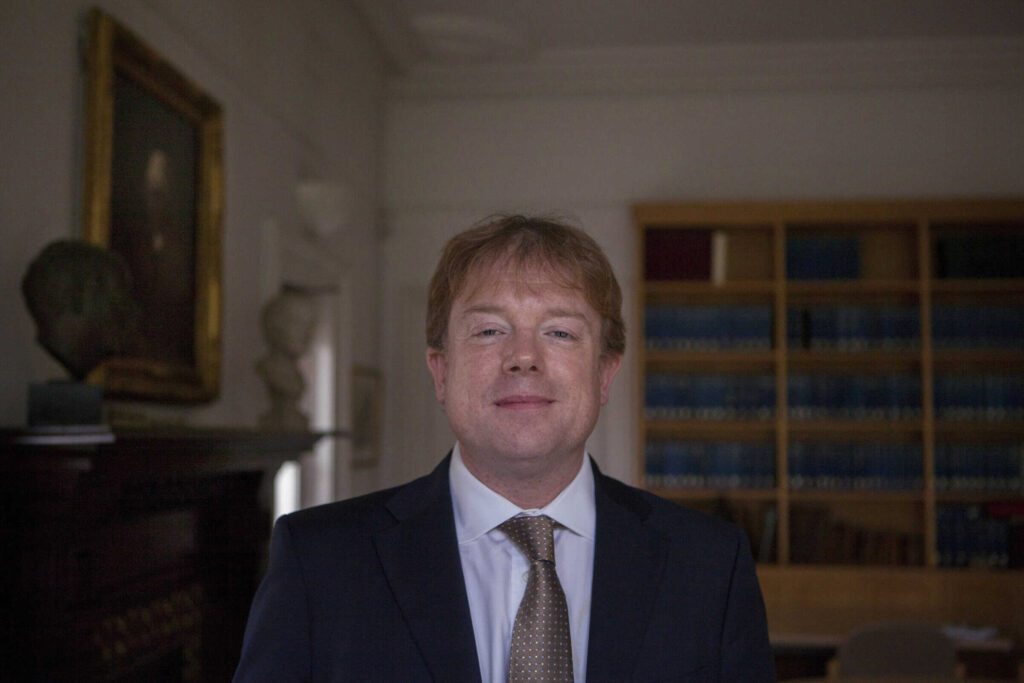
Nick Hillman, Chief Executive of the Higher Education Policy Institute (HEPI), told LSST Life:
"[Higher Education] is definitely not dying; in many ways, the sector is thriving. On A-Level results day [2026] alone, a quarter of a million school leavers secured places. While individual institutions face severe financial pressure...the sector remains resilient. There’s a lot of negative media perception, but it’s not all rooted in evidence."
He added: "Doom-laden narratives underestimate the high aspirations of people, who recognise that fulfilling careers increasingly require higher education qualifications."
Recent UCAS figures make that difficult to dismiss. A record 262,820 UK 18-year-olds secured higher education places in 2026, while the national entry rate remained firm at 31.6%.
Kim Eccleston, Head of Universities and Colleges at UCAS, told LSST Life:
"A record number of UK 18-year-olds are celebrating after gaining a place at higher education institutes and colleges this year, showing that school leavers continue to see higher education as a worthwhile investment in their futures and the best route to unlock their career ambitions."
The economic case has not disappeared either. At age 37, median earnings among women who attended university are 56% higher than among women who did not, with the equivalent gap for men standing at 28% (Department for Education, 2026). Government projections show that these differences persist throughout working lives - after accounting for tax, National Insurance and student loan repayments – the average graduate can expect to be around £100,000 better off than a person with same starting background and academic potential who did not graduate (Department for Education, 2026).
Of course, not every degree, institution, or teaching style is equally guaranteed to succeed. But the evidence itself clearly rejects the idea that higher education has lost its value. What has changed is the flawed assumption that institutions can stand still while the world around them accelerates.
The good news is that the policy architecture to enable a much needed shift is now here. The incoming Lifelong Learning Entitlement (LLE) begins to move student finance away from the assumption that higher education must be consumed as one continuous block. From January 2027, eligible learners will be able to use funding for approved modules as well as full courses, creating the beginnings of a more modular model in which people can return and retrain as their circumstances change.
Patrick Milnes, Head of People and Work Policy at the British Chambers of Commerce, told LSST Life:
"Higher education institutes play a vital role in the UK economy, producing skilled graduates, driving innovation, strengthening the country’s cultural offering and boosting growth. While many have improved links with employers through placements, apprenticeships and industry partnerships, businesses still see opportunities for closer alignment with the needs of our fast-changing labour market."
However, Philippa Pickford, Director of Regulation at the OfS, warns: "While the sector has reported a modest improvement in financial performance, significant challenges remain."
OfS data show that 35.8% of English higher education providers reported a deficit in 2024–25, a figure forecast to rise to 42.7% for the 2025–26 data set (OfS, 2026a). This pressure is reshaping today’s decisions about courses, staffing, recruitment and, ultimately, what individual higher education institutions stand for. Some will adapt successfully. Others may have to shrink, merge or close. But that alone is not necessarily evidence of a sector in terminal decline. It may instead be the uncomfortable process by which an even better system takes shape.
In the age of AI
A new Policy Exchange report (17 August 2026) found that 78% of UK universities use online exams for summative assessment, while 70% plan to continue doing so. Only 10% use online invigilation for all their remote exams, while 67% of university policies for such exams do not mention generative AI (Newton, 2026). The implications go well beyond assessments and into industry. According to the Institute of Student Employers (2026), nearly nine in ten (87%) of employers expect AI adoption to reshape graduate and apprentice roles.
Stephen Isherwood, joint CEO, Institute of Student Employers, told LSST Life:
"AI is yet to replace entry-level jobs at scale, instead we're seeing roles reshaped. That means graduates getting to grips with using AI for routine tasks such as admin, first content drafts and work with basic data. This requires a good level of critical thinking and judgement. Employers are looking for people who can adapt to different working practices and collaborate with others. We're seeing more call for general digital literacy and AI skills too."
This reality renders the simplistic 'AI v Graduates' debate obsolete. Far from diminishing the value of higher education or rigorous assessment, automation actually raises the stakes for the respective human skills a degree is meant to build.
Innovation in action
The most encouraging response is not coming from grand predictions about the future. It is visible in what institutions are already doing. In the table below, you see it in Staffordshire University building a virtual campus inside the Fortnite game to meet students on their own terrain and Queen's University Belfast launching alcohol-free e-sports hubs, offering a different way of thinking about campus social life.
At UWE Bristol, lectures are being swapped for high-pressure major disaster simulations, while Imperial College London is turning student ideas into commercial scaleups through an entrepreneurship ecosystem.
| Rank | University | Innovation / Model | What They Did | Why it's Innovative | Award / Recognition | Lesson Learned for UK HE | Source |
|---|---|---|---|---|---|---|---|
| 1 | University of Staffordshire | StaffsVerse: university campus recreated as a Fortnite island | Virtual recreations of three campuses, mini-games and interactive experiences; built by students through the 1UP in-house games studio placement programme. | Turns university recruitment/orientation into an interactive gaming experience and gives students real production experience. | Gold - Heist Awards 2025 / Innovative Use of Technology | Make the university part of the culture students already inhabit and let students build the experience. | www.staffs.ac.uk/news/2025/07/game-changing-virtual-campus-scoops-national-award |
| 2 | Queen's University Belfast | Reboot gaming café | Alcohol-free student venue combining gaming, esports, retro arcade/console play and community space. | Treats belonging and social life as part of the university product, not an afterthought. | Winner of TUCO Awards 2025, Innovation; also Public Sector Catering Awards 2025, Innovation | Build physical spaces students genuinely want to spend time in. | https://www.qub.ac.uk/sites/StaffGateway/News/NewsArchive/2025/reboot-cafe-wins-catering-innovation-award.html |
| 3 | UWE Bristol | Major Incident Clinical Care simulations | Large-scale disaster simulations involving multi-professional teams and external partner agencies, designed to recreate real emergency conditions. | Replaced passive teaching with high-pressure, realistic experience and teamwork. | Winner - Times Higher Education Awards 2025, Most Innovative Teacher of the Year | Simulate the real world instead of merely describing it. | https://www.uwe.ac.uk/news/innovation-award |
| 4 | Imperial College London | Entrepreneurial ecosystem / Enterprise Lab / Imperial Incubator / Global network | Integrated support taking student and academic ideas from concept towards startups, scaleups and global markets; global hubs and Venture Treks expand access. | Makes the university a venture-building platform rather than simply a place to obtain a qualification. | Winner - Times Higher Education Awards 2025, Outstanding Entrepreneurial University | Make entrepreneurship a core university experience and connect ideas to capital, markets and mentors. | https://www.imperial.ac.uk/news/articles/2025/imperial-wins-outstanding-entrepreneurial-university-at-the-awards/ |
| 5 | University of Warwick | We are Chemistry (WaC) | Students and staff co-create a large programme of activities around belonging, learning, wellbeing and engagement; more than 200 activities and about 20,000 participants since 2022. | Moves the student experience from a service delivered to students towards a community built with students. | Advance HE Collaborative Award for Teaching Excellence 2025; Royal Society of Chemistry Inclusion & Diversity Prize 2025 | Gives students genuine ownership and co-creation roles/power. | https://www.rsc.org/standards-and-recognition/prizes/winners/we-are-chemistry-%28wac%29 |
| 6 | University of Strathclyde | StrathApp Student Co-creation Development Model | Students work directly with staff/developers to iteratively improve the university app covering timetables, results, digital ID, library entry, navigation and support. | Students become product developers and co-creators of the institution's digital experience. | Winner of UCISA Transformation Award 2025 | Build university services with students, not merely for them. | https://www.strath.ac.uk/whystrathclyde/news/2025/ucisaawardwin/ |
| 7 | Lancaster University | Quantum Base spinout | University research became a commercial quantum-technology company and Lancaster's first spinout to float on London's AIM market. | Shows research moving all the way into investment, jobs and commercial impact. | Winner - Times Higher Education Awards 2025, Knowledge Exchange/Transfer Initiative of the Year | Shows students and society what university knowledge becomes in the real economy. | https://www.lancaster.ac.uk/business-and-innovation/news/times-higher-education-award-for-lancasters-innovation-success-story |
| 8 | Teesside University | Place-based digital and economic transformation | Major campus investment including the Digital Life building, alongside employer links, apprenticeships and a mission tied to the Tees Valley economy. | Differentiates through regional impact and a modern digital proposition rather than trying to imitate elite universities. | Winner - Times Higher Education Awards 2025/ University of the Year | Become indispensable to the region and its employers. | https://www.tees.ac.uk/sections/about/university/university_year2025.cfm |
| 9 | University of Leeds | Immersive curriculum / VR field experiences | Virtual newsroom/virtual food-manufacturing tour, virtual farm/lab experiences and VR/AI simulations for professional skills. | Lets students experience places, roles and situations that are difficult or expensive to access physically | University digital education programme / sector-recognised innovation examples | Uses immersive technology to expand the range of experiences a degree can offer. | https://digitaleducation.leeds.ac.uk/wp-content/uploads/sites/14/2026/01/2025.12.23-DE-Annual-Report-2024-25.pdf |
| 10 | University of Strathclyde | Innovation Forum and challenge-led innovation | Staff and community members submit ideas, investigate them, prioritise solutions, implement changes and check results/examples include meeting-free Fridays and improved induction. | Turns institutional innovation into repeatable participatory process rather than isolated projects. | Institutional innovation programme; Strathclyde also won five Scottish Knowledge Exchange Awards in 2025 across related work. | Creates a mechanism through which everyone in the university can improve the institution. | https://www.strath.ac.uk/whystrathclyde/innovationforum/ |
Across the sector, the institutions proving most resilient are the ones ditching passive, one-size-fits-all teaching in favour of hands-on experience in the real-world. Much of this approach is already delivering results at LSST. In the 2026 National Student Survey (NSS), LSST achieved over 90% positivity across nine core themes. That is one institution's result and not proof of a one-size-fits-all formula – but it does point towards something important. Students respond to education that connects what they learn with what they are being prepared to do.
Across the sector, forward-looking institutions are beginning to abandon outdated delivery models to rebuild what higher education offers. This shift is not limited to traditional degree pathways. It is rapidly reshaping further education and adult skills provision. Through Skills Bootcamps and accredited technical training, providers are demonstrating how employment-led education can bridge regional skills gaps. By connecting adult learning and technical retraining more closely with higher education, institutions are creating the flexible modular learning people need to keep up with a changing labour market.
What is higher education actually for?
If the answer were just to "train workers", a trade school would do. If it were only to "generate research", a lab would suffice. Higher education exists for something bigger: to build critical minds, develop expertise, build knowledge; and solve global problems. It is not a factory for degrees but a proving ground - a place where people learn to think.
Negative headlines will continue to trumpet a system in decline but they confuse structural upheaval with structural demise. Research-intensive universities, specialist institutions, further education colleges, employer-led apprenticeships and private further and higher education providers such as LSST can serve different purposes without any of them being inherently less valuable. That is not a collapse. That is evolution.
The author thanks the Higher Education Policy Institute (HEPI), the Office for Students (OfS), Universities UK (UUK), the Universities and Colleges Admissions Service (UCAS), the British Chambers of Commerce (BCC) and the Institute of Student Employers (ISE) for their time and support with this article.
Declaration: ChatGPT was used to review grammar and clarity in a final draft and several small changes were subsequently made. The title image was created using Adobe Firefly and Gemini software by the author using prompts for degree hat and Union Jack. Views are the author's or contributors' own.
References
Department for Education (2026). Undergraduate degrees: new estimates on lifetime earnings. Research Report (RR1642). Department for Education. Published 25 June 2026. https://www.gov.uk/government/publications/undergraduate-degrees-new-estimates-on-lifetime-earnings (Accessed 16 August 2026).
House of Commons Education Committee (2026). Higher Education and Funding: Threat of Insolvency and International Students. Ninth Report of Session 2024–26. HC 807. London: House of Commons. Available at: Higher Education and Funding: Threat of Insolvency and International Students (accessed 18 August 2026).
Institute of Student Employers (2026a). Entry-level work reshaped not replaced. Available at: https://ise.org.uk/knowledge/insights/562/entrylevel_work_reshaped_not_replaced/ (Accessed: 17 August 2026).
Newton, P.M. (2026). Evidence of Learning Through Assessment: Protecting the Value of a Degree in the Age of AI. London: Policy Exchange. Available at: https://policyexchange.org.uk/publication/evidence-of-learning-through-assessment/. (Accessed 18 August 2026).
Office for Students (2026a). Financial sustainability of higher education providers in England 2026. Available at: https://www.officeforstudents.org.uk/publications/financial-sustainability-of-higher-education-providers-in-england-2026/. (Accessed: 16 August 2026).
Office for Students (2026b). 'OfS warns against persistent over-optimism as analysis finds institutions under continued financial pressure'. Available at: https://www.officeforstudents.org.uk/news-blog-and-events/press-and-media/ofs-warns-against-persistent-over-optimism-as-analysis-finds-institutions-under-continued-financial-pressure/. (Accessed: 16 August 2026).
The Telegraph (2026). 'Should you bother going to university? Andy Burnham doesn't think so', The Telegraph, [online]. Available at: https://www.telegraph.co.uk/money/jobs/schools-universities/should-you-bother-going-to-university-andy-burnham/ (Accessed: 14 August 2026).
UCAS (2026). 'Quarter of a million UK 18-year-olds gain place at university or college', UCAS, 13 August. Available at: https://www.ucas.com/corporate/news-and-key-documents/news/quarter-of-a-million-uk-18-year-olds-gain-place-at-university-or-college. (Accessed 17 August 2026).
UK Parliament (1991). 'Further and Higher Education', Hansard, House of Commons, 20 May. Available at: https://api.parliament.uk/historic-hansard/commons/1991/may/20/further-and-higher-education. (Accessed: 16 August 2026).
Sharing is caring!